
Art Against the Useful
Brave New WorldThe novel traces how a society devoted to stability suppresses older art while preserving only entertainment designed for immediate sensation.
increasing Bearing strength in each event
 decreasing
Bearing strength in each eventdecreasingHistory Erased

The Past as Threat
Doctrine
Mustapha Mond repeats the maxim that history is bunk and symbolically brushes away civilizations, religions, and works of art.
Purpose
The removal of history prevents comparison between present arrangements and alternative ways of living. Cultural memory becomes a political risk.
A Book from Malpais
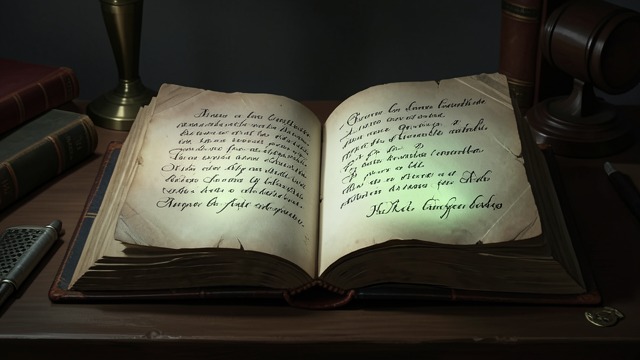
Shakespeare’s Arrival
Discovery
John finds The Complete Works of William Shakespeare among Linda’s possessions and begins reading it. Its language gives his feelings a powerful new vocabulary.
Formation
The book becomes an inner resource for interpreting love, grief, and rage. It also prepares him for repeated misreadings of London’s social customs.
A Forbidden Performance
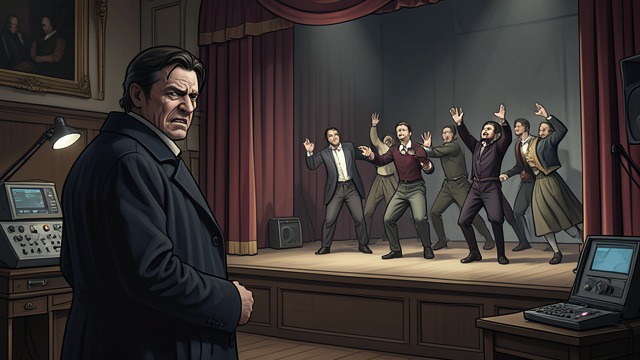
Tragedy Misunderstood
Response
Helmholtz admires Shakespeare’s technique but laughs at the lovers’ conflict with their parents. His conditioned world cannot take the family drama seriously.
Limits of communication
John experiences the laughter as desecration. The scene shows how censorship and social transformation can make great art emotionally inaccessible.
Mustapha Mond’s Explanation

Art Sacrificed
Argument
Mustapha Mond admits that Othello is better than the feelies, but argues that tragedy depends on instability absent from the modern world.
Trade-off
High art is exchanged for reliable pleasure. The Controller’s argument is persuasive within the system’s priorities, but confirms that beauty has been deliberately excluded.
The Islanding of Talent

Art’s Residual Danger
Decision
Helmholtz is sent to the Falklands, where his independence may develop away from the population. The State contains rather than debates his dissent.
Aftermath
The fate of creative people demonstrates that artistic power remains possible, but its public expression is restricted by the pursuit of stability.
During Mustapha Mond’s garden conversation
During John’s adolescence
During John’s reading of Romeo and Juliet to Helmholtz
During the questioning after the hospital riot
At the end of Mustapha Mond’s interrogation
